Abbreviations
EngineeringHere’s an list of engineering abbreviations 1. General Engineering Abbreviations 2. Mechanical & Structural Engineering 3. Electrical & Electronics Engineering […]
Here’s an list of engineering abbreviations 1. General Engineering Abbreviations 2. Mechanical & Structural Engineering 3. Electrical & Electronics Engineering […]
Introduction Fire water demand calculation is a critical aspect of fire protection engineering in process plants, oil & gas facilities,
Introduction Safety Instrumented Systems (SIS) play a crucial role in managing risks in hazardous industries like oil & gas, petrochemicals,
Comparison Between SIL Study, SIL Verification, SIL Validation, and LOPA Read Post »
Comprehensive List of Codes, Standards, Reference Books, and Guidelines for Process Safety in the Oil and Gas Industry 1. Process
Comprehensive List of Process Safety Studies and Standards in the Oil & Gas Industry Read Post »
Process safety studies in the oil & gas industry are governed by various international codes, standards, guidelines, and reference books.
Process safety studies are critical to identifying and mitigating hazards in the oil & gas industry. This guide offers a detailed overview of the key studies conducted across all project phases — from HAZOP and QRA to CFD and PSM audits.
🔍List of Process Safety Studies in the Oil & Gas Industry Read Post »
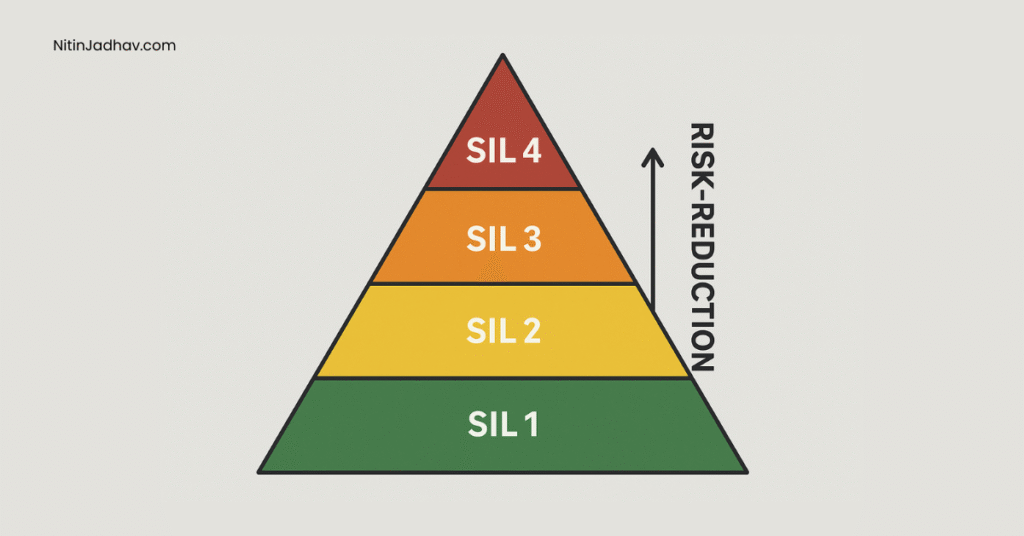
A comprehensive and practical guide for engineers and safety professionals to understand, implement, and verify Safety Integrity Level (SIL) studies as per IEC 61508/61511. Includes SIL determination methods (LOPA, Risk Graph), real-world case studies, tools, and step-by-step implementation checklist.
Safety Integrity Level (SIL) Study – A Comprehensive Guide Read Post »
Key Points What is a SIL Study? A SIL Study is a systematic process to evaluate and ensure the safety
A comprehensive guide to HAZOP (Hazard and Operability) Study—covering methodology, team roles, guide words, worksheet formats, tools, standards, and practical examples for engineers and safety professionals.
HAZOP Study: A Detailed Guide Read Post »
HAZID (Hazard Identification) is a proactive risk assessment technique used in high-risk industries to identify and mitigate hazards early in the project lifecycle. This article outlines the methodology, timing, team composition, and benefits of conducting a HAZID study in oil & gas and polyolefins sectors.
Hazard Identification (HAZID) Study – A Comprehensive Guide Read Post »
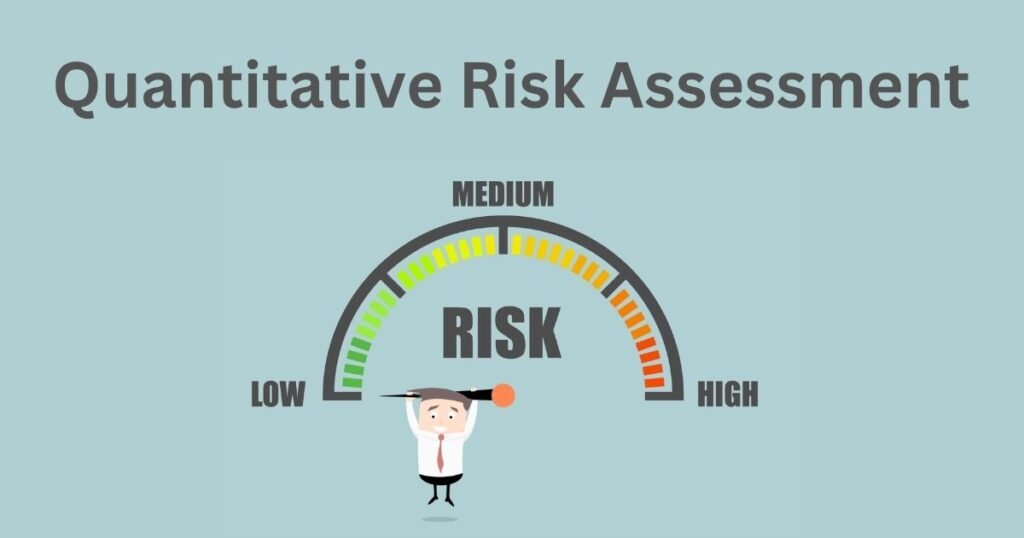
Comprehensive Guide on Quantitative Risk Assessment (QRA) in the Oil and Gas Industry Introduction Quantitative Risk Assessment (QRA) is a
Quantitative risk assessment Read Post »
In chemical and process industries, converting mole fraction to parts per million (PPM) is a crucial calculation for understanding gas
Converting Mole Fraction to PPM: A Step-by-Step Guide Read Post »