process safety

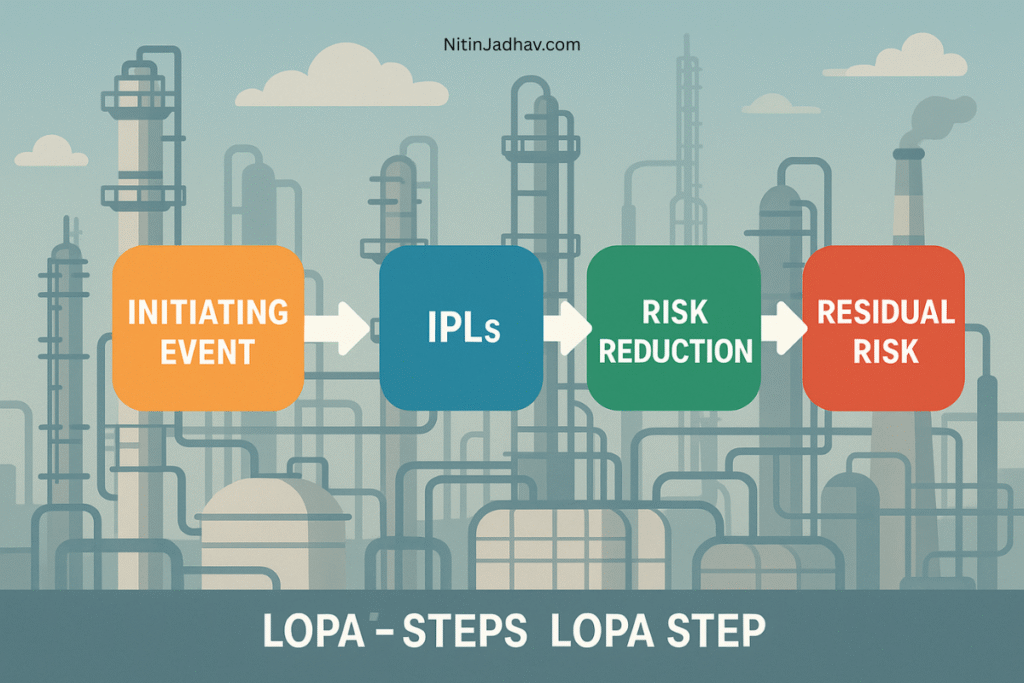
LOPA methodology visual showing protection layers and SIL linkage in process safety assessment

Layers of Protection Analysis (LOPA) Study – A Detailed Guide to Risk Reduction and Safety Integrity

Chemical Engineering, Process Safety, Risk Assessment, Safety Engineering, SIL & SIS

A detailed guide to LOPA (Layers of Protection Analysis), covering methodology, initiating events, IPLs, risk criteria, SIL linkage, and practical examples for improving process safety in oil & gas and chemical industries.

Layers of Protection Analysis (LOPA) Study – A Detailed Guide to Risk Reduction and Safety Integrity Read Post »

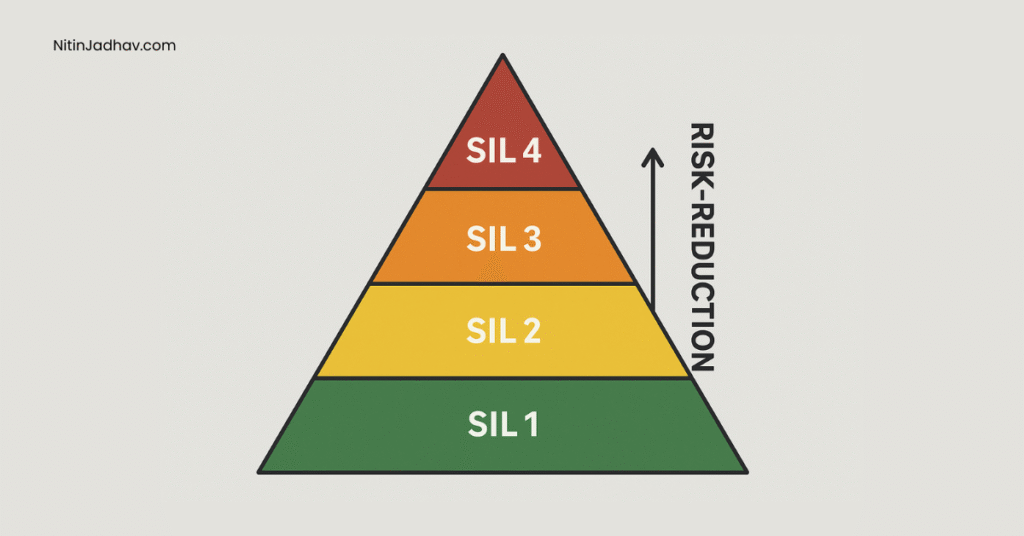
Illustration of Safety Integrity Levels and risk reduction in process industry safety systems

Safety Integrity Level (SIL) Study – A Comprehensive Guide

Engineering, Functional Safety, Process Safety, Risk Management

A comprehensive and practical guide for engineers and safety professionals to understand, implement, and verify Safety Integrity Level (SIL) studies as per IEC 61508/61511. Includes SIL determination methods (LOPA, Risk Graph), real-world case studies, tools, and step-by-step implementation checklist.

Safety Integrity Level (SIL) Study – A Comprehensive Guide Read Post »

HAZID team conducting risk assessment for oil and gas project using process diagrams

Hazard Identification (HAZID) Study – A Comprehensive Guide

Industrial Safety, Process Safety, Risk Assessment Techniques

HAZID (Hazard Identification) is a proactive risk assessment technique used in high-risk industries to identify and mitigate hazards early in the project lifecycle. This article outlines the methodology, timing, team composition, and benefits of conducting a HAZID study in oil & gas and polyolefins sectors.

Hazard Identification (HAZID) Study – A Comprehensive Guide Read Post »

Scroll to Top