Fire Water Spray System design for Pumps
Calculations, Loss PreventionFire Water Spray System design for Pumps Read Post »

A deluge valve is a vital fire protection component designed for rapid suppression in high-risk areas. This article explains how it works, its types, applications, and key considerations for proper sizing to ensure effective fire safety
Deluge Valve: Working Principle, Applications, and Sizing Design Guide Read Post »

Clean Agent Fire Suppression Systems offer a non-damaging, residue-free, and efficient way to protect sensitive environments like data centers and laboratories from fire hazards. Discover their types, applications, benefits, and best practices for installation and maintenance.
Clean Agent Fire Suppression System: A Comprehensive Guide Read Post »
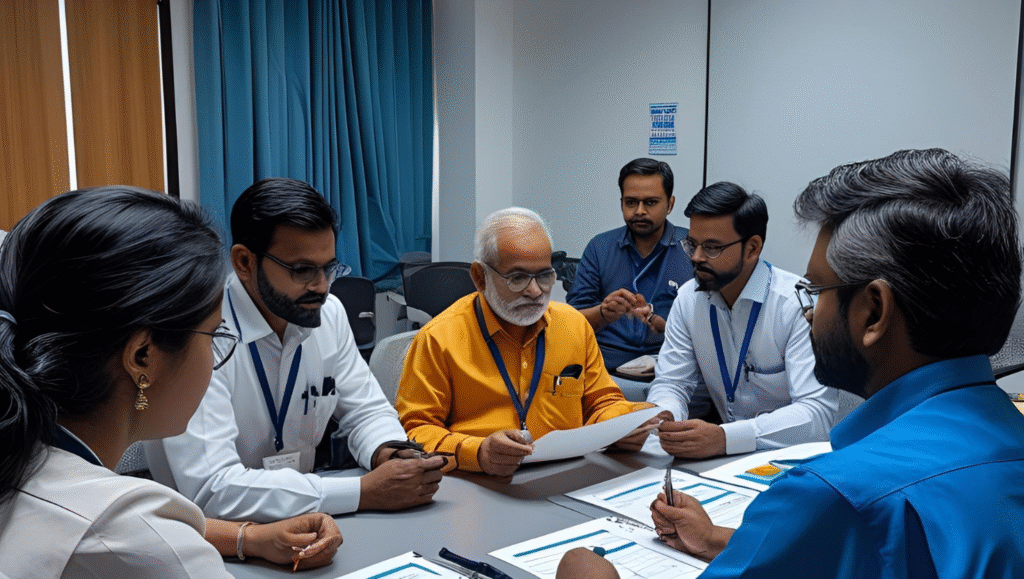
Discover how a structured HAZID (Hazard Identification) study systematically uncovers and mitigates hazards in oil & gas, petrochemical, and polyolefin plants—ensuring safer, compliant operations from concept through decommissioning.
1. Hazard Identification & Risk Assessment (HIRA) 2. Safety Integrity & Layer of Protection 3. Quantitative Risk & Consequence Analysis
list of Process Safety and Loss Prevention (PSLP) activities Read Post »
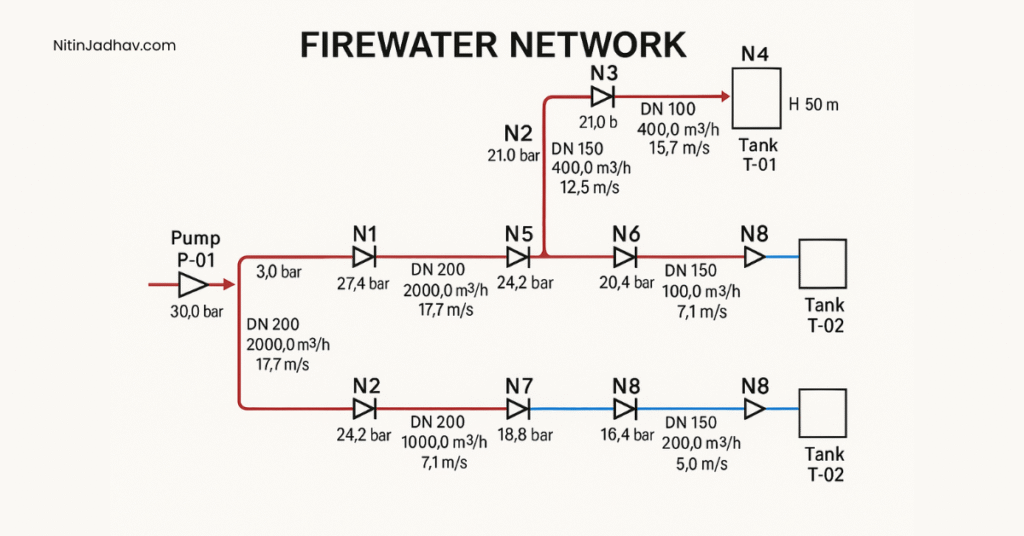
A comprehensive guide on hydraulic calculations using PIPENET. Learn the methodology, calculation inputs, assumptions, and fire safety applications in EPC projects.
Hydraulic Calculations Using PIPENET: Methodology & Calculation Basis Read Post »
Introduction Surge analysis, also known as transient analysis, is a critical study in fluid flow systems to evaluate pressure fluctuations
Surge Analysis in Process Plants and Pipelines Read Post »
Introduction Reliability, Availability, and Maintainability (RAM) Study is a critical analysis used in the oil & gas, petrochemical, and process
RAM Study (Reliability, Availability, and Maintainability Study) Read Post »
Introduction Fire hazards pose a significant risk in industrial facilities, particularly in process plants, oil & gas installations, and polyolefin
Fire Hazard Study for Process Plants, Oil & Gas Industry, and Polyolefin Plants Read Post »
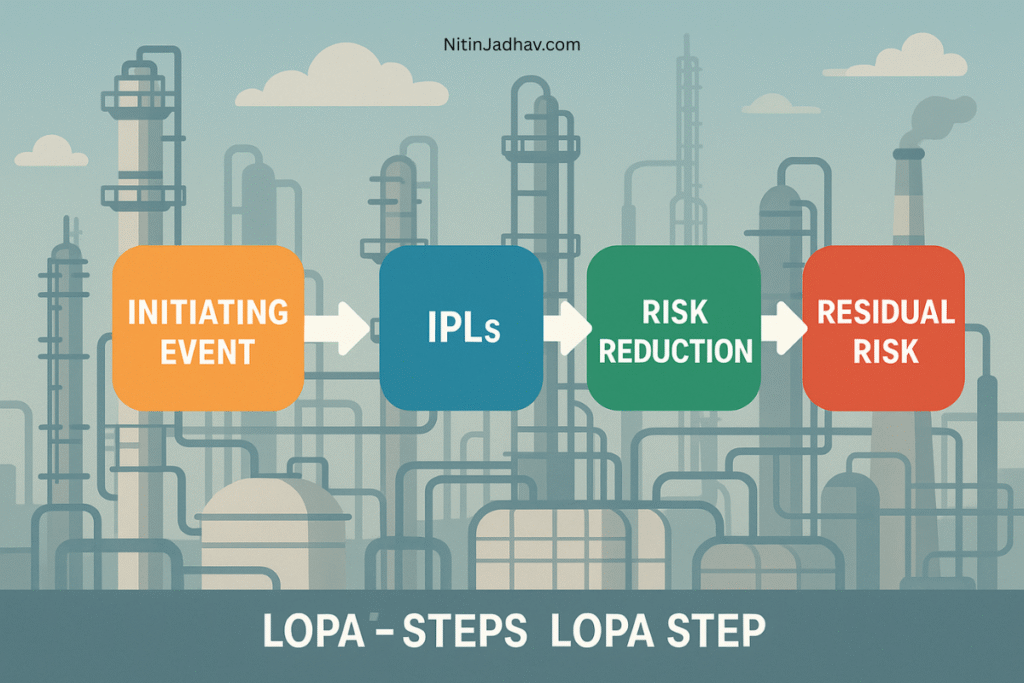
A detailed guide to LOPA (Layers of Protection Analysis), covering methodology, initiating events, IPLs, risk criteria, SIL linkage, and practical examples for improving process safety in oil & gas and chemical industries.
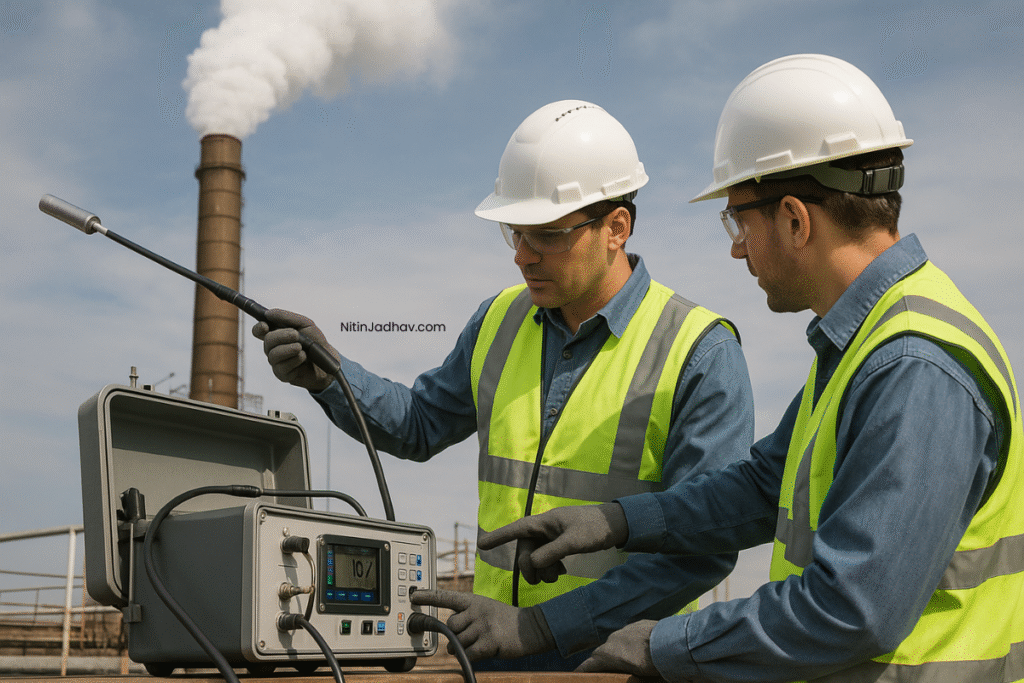
A complete guide to understanding and managing air emissions from process plants, covering key pollutants, global and Indian regulations, emission estimation methods, control strategies, and a real-world refinery case study.
Air Emissions Study for Process Plants, Oil & Gas Industry, and Polyolefin Plants Read Post »
1. Introduction Fire, explosion, and gas dispersion studies are essential components of process safety in oil & gas, petrochemical, and
Fire, Explosion, and Gas Dispersion Study Read Post »