HAZID Procedure: A Detailed Step-by-Step Guide for Hazard Identification Studies
HAZID (Hazard Identification) is one of the most important structured safety studies carried out during the early stages of an industrial project. It identifies significant hazards, evaluates their potential consequences, reviews existing safeguards, assesses risk, and develops recommendations — all before the design becomes difficult or expensive to change.
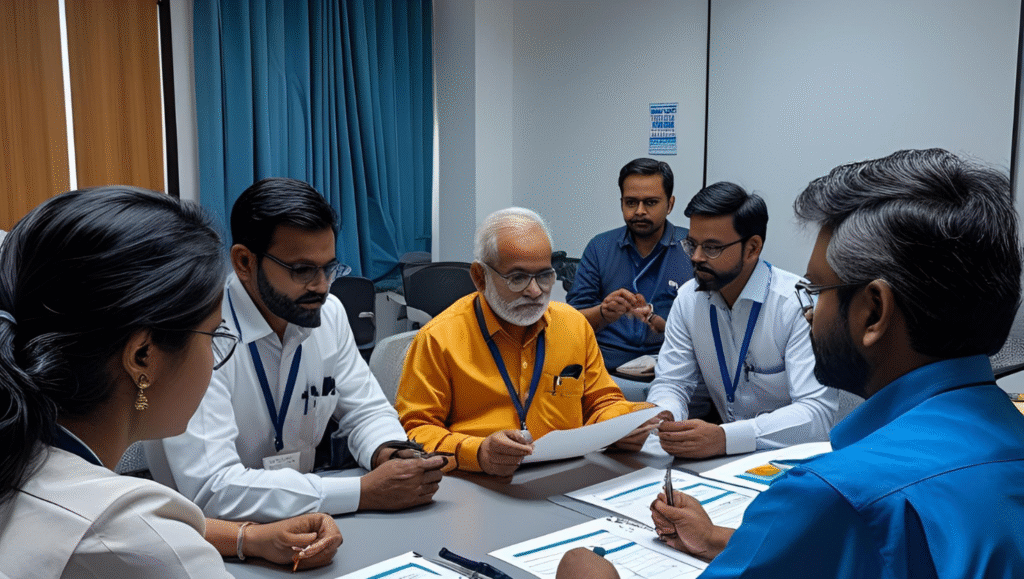
A well-executed HAZID is not a checklist exercise. It is a structured, multidisciplinary brainstorming and risk assessment process that brings together process, engineering, operations, maintenance and HSE knowledge.
This guide walks through a practical HAZID procedure applicable to oil & gas, petrochemical, chemical, energy, utilities and other process industry projects.
1. What Is HAZID?
HAZID stands for Hazard Identification Study. It is a structured review used to identify hazards associated with a facility, process, system, activity or project, and to determine whether adequate safeguards exist to prevent a hazardous event or reduce its consequences.
HAZID is generally performed at a higher level than detailed studies such as HAZOP. It typically focuses on plant areas, systems, equipment groups, interfaces and major hazard scenarios, rather than detailed process deviations.
Main objectives of HAZID:
- Identify hazards affecting people, the environment, assets or the public
- Identify credible causes and hazardous events
- Understand potential consequences
- Review existing preventive and mitigative safeguards
- Identify interfaces with existing or neighboring facilities
- Assess initial risk
- Identify additional actions where safeguards are inadequate
- Provide early safety input into project design
At its core, HAZID is a formal, cross-disciplinary review intended to identify critical HSE hazards and feed directly into project development decisions.
2. Where HAZID Fits in the Project Lifecycle
HAZID delivers the most value during early project stages, while key design decisions are still flexible. Typical trigger points include:
- Concept selection
- Feasibility
- Pre-FEED
- FEED
- Detailed design (when required)
- Major modifications or debottlenecking
- Brownfield integration
- Decommissioning or major changes in operating philosophy
The earlier significant hazards are caught, the easier it is to eliminate or reduce them through inherently safer design. For example, identifying an excessive hazardous inventory during concept design allows the team to reconsider equipment location, storage philosophy, process routing, isolation philosophy, drainage, separation distances, hazardous-area classification and emergency response arrangements — far more effective than discovering the same issue after construction.
3. HAZID vs HAZOP
| Aspect | HAZID | HAZOP |
|---|---|---|
| Primary purpose | Identify major hazards | Identify process deviations |
| Typical level | Plant / area / system | System / line / equipment |
| Study timing | Early project stages | Usually after sufficient process design |
| Main focus | Major accident and significant HSE hazards | Deviations from design intent |
| Guidewords | Hazard-oriented | Parameter/deviation-oriented |
| Typical input | Layout, process concept, equipment information | P&IDs, process design information |
| Output | Hazard scenarios and recommendations | Deviations, causes, consequences, safeguards |
A simple way to remember the distinction:
HAZID asks: “What can seriously go wrong?” HAZOP asks: “What deviations from the design intent can occur, why, and what happens?”
The two studies complement each other rather than replace one another.
4. HAZID Study Philosophy
4.1 A Multidisciplinary Approach Is Non-Negotiable
No single discipline holds enough knowledge to identify every credible hazard. A process engineer may spot overpressure or reaction hazards; an operator may spot practical issues invisible on a drawing.
- Process engineers – process hazards
- Mechanical engineers – equipment failure modes
- Piping/layout engineers – congestion, access, separation issues
- Electrical engineers – ignition sources, power-related hazards
- Instrumentation engineers – control and shutdown functions
- HSE engineers – risk, emergency response, major accident scenarios
- Operations personnel – real operating practices
- Maintenance personnel – inspection, isolation and maintenance risks
HAZID must always be a team study, never an individual assessment.
5. Building the HAZID Team
A typical team includes a competent facilitator/chairman plus representatives from relevant technical and operational disciplines:
- HAZID Chairman / Facilitator
- HAZID Scribe
- Process Engineer
- Process Safety / HSE Engineer
- Project Engineer
- Piping Engineer
- Layout Engineer
- Mechanical Engineer
- Electrical Engineer
- Instrumentation / Control Engineer
- Operations Representative
- Maintenance Representative
- Engineering Representative
- Fire & Safety Representative
- Emergency Response Representative (where applicable)
- Other subject matter experts as required
Core participants typically include the chairman, scribe, HSE lead, process lead, piping/layout lead, project engineering, and owner operations/maintenance/engineering representatives.
Role of the Chairman
- Defines the study methodology
- Explains objectives and boundaries
- Ensures everyone understands the guidewords
- Encourages constructive brainstorming
- Prevents any one discipline from dominating
- Keeps discussions focused
- Resolves disagreements or logs them for follow-up
- Confirms causes, consequences and safeguards are captured correctly
- Ensures recommendations are specific and actionable
The chairman facilitates — they don’t supply all the answers.
Role of the Scribe
The scribe records the discussion in real time, capturing:
- Hazard
- Cause
- Event/scenario
- Consequence
- Existing safeguards
- Risk ranking
- Recommendations
- Action owner
- Target date
- Additional comments or assumptions
A poor record can undermine an otherwise excellent workshop — the scribe’s role is critical.
6. HAZID Inputs — What to Gather Before the Workshop
Project information: description, design basis, scope, battery limits, operating philosophy, safety philosophy
Drawings: plot plan, general arrangement, equipment layout, piping layouts, process flow diagrams, simplified PFDs, utility layouts, access/escape arrangements
Process information: process description, chemical inventory, material properties, operating/design pressures and temperatures, hazardous materials, flammability/toxicity data
Safety information: fire & gas philosophy, ESD philosophy, detection systems, fire protection philosophy, emergency response philosophy, relief and flare philosophy, hazardous area classification
External information: neighboring facilities, existing plant, roads, buildings, public areas, utilities, environmental receptors, natural hazard data
A HAZID is only as good as the information available to the team.
7. Define the HAZID Scope
Establish clear boundaries up front:
- Facility included / excluded
- Battery limits
- Operating phases considered (normal, startup, shutdown, emergency, maintenance)
- Design stage
- Interfaces with other facilities
- Temporary facilities, if applicable
A clear scope stops the workshop from becoming unmanageably broad — or from missing critical interfaces.
8. Divide the Facility into Zones or Nodes
Break the facility into manageable HAZID areas, zones or nodes based on layout and process function.
Process areas: feed handling, reaction section, separation section, compression area, utility systems
Storage areas: hydrocarbon storage, chemical storage, LPG storage, tank farm
Utility areas: boiler area, cooling water system, electrical substation, instrument air, nitrogen system
Flare and relief facilities: flare header, knockout drum, flare stack, relief systems
Other areas: control room, electrical rooms, warehouse, workshop, loading/unloading areas, roads and access
A simple, common split is: Process, Storage Tank, Flare, and Non-Process areas.
9. Select HAZID Guidewords
Guidewords stimulate structured brainstorming so the team considers a wide range of credible hazards, not just the obvious process scenarios.
Loss of containment: small leak, large leak, catastrophic rupture, flange leakage, valve leakage, seal failure, hose failure, flexible connection failure, instrument tubing failure
Fire: pool fire, jet fire, flash fire, fire following loss of containment, external fire exposure
Explosion: vapor cloud explosion, confined explosion, overpressure, dust explosion (where applicable), BLEVE-type scenarios (where applicable)
Toxic release: toxic gas/liquid release, personnel exposure, off-site impact
Pressure: high/low pressure, vacuum, blocked outlet, thermal expansion, gas blow-by, relief failure
Temperature: high/low temperature, cryogenic exposure, loss of cooling, excessive heating
Flow: no flow, low flow, high flow, reverse flow, wrong flow path, loss of utility flow
Mechanical/equipment: equipment failure, rotating equipment failure, vibration, seal failure, structural failure, dropped objects
Electrical: ignition, loss of power, short circuit, static electricity, earthing failure, lightning
Human/operational: human error, incorrect operation or lineup, inadequate isolation, maintenance error, simultaneous operations
External/interface: nearby plant fire or explosion, vehicle impact, external gas release, utility failure, pipeline interaction, third-party activities
Natural hazards: earthquake, flood, cyclone, extreme wind, lightning, extreme temperature, tsunami, landslide
Adapt the exact guideword list to the facility and project requirements — don’t apply a generic list blindly.
10. The HAZID Workshop Sequence
Step 1 — Review the Zone
Display the selected zone on the plot plan or drawing. Confirm equipment present, process function, connections, adjacent areas, access routes, buildings, utilities, escape routes, and hazardous inventories. Understand the physical and functional boundaries before discussing hazards.
Step 2 — Apply the Guidewords
Work through each zone systematically. For example:
Zone: Hydrocarbon Pump Area Guideword: Loss of containment
Ask:
- What can leak? Where? Why?
- What happens after release?
- Can the released material ignite?
- Can it reach another facility?
- Are personnel exposed?
- Is detection provided?
- Can the source be isolated?
This turns free-form brainstorming into a structured, repeatable process.
11. Identify the Hazard
Describe the hazard clearly — avoid vague labels.
Weak: “Leak” Better: “Loss of containment of flammable hydrocarbon from pump mechanical seal.”
A precise description gives the team a solid basis for developing the scenario.
12. Identify Causes
Determine credible initiating causes:
- Equipment failure
- Corrosion / erosion
- Overpressure
- Mechanical seal failure
- Instrument failure
- Human error
- Incorrect valve operation
- Utility failure
- Loss of cooling
- Blocked outlet
- External impact
- Poor maintenance
- Improper installation
Focus on credible scenarios appropriate to the study level — not every theoretically possible failure.
13. Identify the Hazardous Event / Scenario
Develop the cause into a specific scenario following the chain:
Cause → Hazardous Event → Consequence
Example: Cause: Pump mechanical seal failure Event: Hydrocarbon release from pump seal Consequence: Flammable vapor cloud formation, followed by flash fire or jet fire after ignition
Another example: Cooling failure → Reactor temperature increases → Loss of reaction control → Overpressure → Relief system activates
14. Identify Consequences
Assess consequences across multiple impact categories.
People: fatality, serious injury, burns, toxic exposure, asphyxiation, blast injury, multiple casualties
Environment: soil/water contamination, air emissions, marine pollution, long-term impact
Assets/property: equipment damage, fire/explosion damage, structural damage, progressive escalation, production loss
Business/operations: production loss, plant shutdown, extended downtime, equipment replacement
Human, environmental and material consequences should all be explicitly considered.
15. Identify Existing Safeguards
Preventive safeguards (act before the event): Design pressure limits, interlocks, control systems, high-level/high-temperature trips, pressure control, preventive maintenance, corrosion control, operating procedures
Mitigative safeguards (reduce consequences after the event): Gas/fire detection, deluge, firewater, ESD, isolation valves, relief systems, vent systems, blast-resistant structures, containment systems, emergency response
Describe safeguards specifically.
Weak: “Safety system available.” Better: “High-high pressure trip automatically isolates feed to the vessel.”
16. Avoid Double-Counting Safeguards
A common mistake: listing multiple safeguards that actually depend on the same underlying function as if they were independent protection layers. Two alarms fed by the same instrument are not two independent safeguards.
Evaluate each safeguard for:
- Independence
- Reliability
- Availability
- Human dependence
- Failure modes
- Testability
This matters most for high-risk scenarios.
17. Risk Assessment
Risk = Likelihood × Consequence Severity
Risk ranking is an initial sorting mechanism, based on frequency/likelihood and consequence severity. Always use a project-specific, approved risk matrix rather than inventing one during the workshop.
Illustrative conceptual matrix (for reference only):
| Likelihood | Severity 1 | Severity 2 | Severity 3 | Severity 4 | Severity 5 |
|---|---|---|---|---|---|
| Rare | Low | Low | Medium | Medium | High |
| Unlikely | Low | Low | Medium | High | High |
| Possible | Low | Medium | Medium | High | High |
| Likely | Medium | Medium | High | High | Very High |
| Frequent | Medium | High | High | Very High | Very High |
Always use the approved company/project risk matrix for an actual HAZID — this table is illustrative only.
18. Major Accident Hazard (MAH) Identification
A MAH is typically an uncontrolled event capable of severe or catastrophic consequences to people, environment or assets. Examples:
- Major loss of containment
- Large flammable release
- Toxic release
- Major fire
- Explosion
- Structural failure
- Escalation to adjacent facilities
Scenarios reaching the top severity level (e.g., Severity 5) are commonly classified as MAH, subject to the project’s defined methodology — occupational and natural hazards are often excluded from this specific MAH categorization.
Key point: MAH criteria are project-specific. Don’t import another company’s MAH definition or threshold — follow the approved project risk matrix and HAZID procedure.
19. Determine Whether Safeguards Are Adequate
Ask: “Are the existing safeguards sufficient?”
Three common outcomes:
- Existing safeguards are adequate — no further action needed
- Additional safeguard required — raise a recommendation
- Design change should be considered — an engineering modification may be needed instead of an operational fix
Recommendations should always be generated wherever safeguards are found inadequate.
20. Write Good HAZID Recommendations
Poor: “Provide adequate safety.”
Good: “Evaluate installation of remotely operated isolation valves on the hydrocarbon transfer line to limit inventory following detection of a major leak.”
A good recommendation is:
- Specific
- Actionable
- Traceable
- Assigned to a responsible discipline
- Verifiable
- Relevant to the identified risk
Wherever possible, state exactly what needs to be investigated, changed or verified.
21. Recommendation Priority
Categorize recommendations by company/project convention, for example:
- High / Medium / Low priority
or
- Immediate action / Design action / Further study / Verification required / Information required
High-risk scenarios should be flagged for attention before the project progresses further.
22. HAZID Worksheet Structure
A practical worksheet includes:
| Zone | Hazard | Cause | Consequence | Existing Safeguards | Initial Risk | Recommendation | Owner | Target Date | Residual Risk | Status |
|---|
Example row:
| Zone | Hazard | Cause | Consequence | Safeguards | Risk | Recommendation |
|---|---|---|---|---|---|---|
| Pump area | Hydrocarbon release | Mechanical seal failure | Fire / exposure | Gas detection, ESD, firewater | High | Review isolation arrangement |
Each defined zone should be reviewed for potential hazards, with sources, scenarios, consequences and recommendations recorded consistently in the worksheet.
23. HAZID Workshop Rules
- Encourage participation — every discipline should have a voice
- Avoid blaming individuals — the goal is hazard identification, not fault-finding
- Focus on credible scenarios — don’t dwell on extremely improbable events with no practical bearing on the project
- Don’t prematurely reject ideas — discuss first, assess second
- Avoid jumping straight to solutions — work through Cause → Event → Consequence → Safeguards → Risk before deciding on mitigation
- Keep discussion focused — the chairman should prevent lengthy technical debates from derailing the workshop; convert unresolved issues into recommendations or action items
24. Workshop Room and Tools
- Large screen for plot plan/drawings
- Separate screen for the HAZID worksheet
- Whiteboard or flip chart
- Stable document-sharing platform for remote participants
- Controlled document versions
- HAZID software or a structured spreadsheet
- Attendance register
- Action tracker
Arrange the room so both participants and the scribe can clearly see the drawings and the worksheet simultaneously.
25. HAZID Software
HAZID can be run using spreadsheets, dedicated PHA software (e.g., PHA-Pro), risk management platforms, or document management systems. Software helps with scenario tracking, risk ranking, recommendation management, audit trails, report generation and revision control.
But software doesn’t make a HAZID effective — good engineering judgement and a competent multidisciplinary team matter far more than the tool used.
26. HAZID Closeout
The workshop isn’t finished when the last scenario is discussed. A formal closeout should follow:
- Review all recommendations — clear, unique, actionable, assigned
- Confirm risk rankings — consistent and based on the approved matrix
- Verify MAH scenarios — correctly identified
- Assign action owners — every recommendation needs an accountable owner
- Issue the HAZID report, containing: introduction, objectives, scope, methodology, team composition, inputs, guidewords, risk matrix, zoning, worksheets, recommendations, MAH scenarios, attendance, and closeout status
27. Recommendation Closeout Tracking
Track each recommendation with:
- Recommendation number
- Description
- Discipline
- Responsible person
- Required action
- Target date
- Status
- Response
- Evidence
- Closure date
Typical status flow: Open → Under Review → Action in Progress → Completed → Verified → Closed
Only close a recommendation once sufficient supporting evidence has been provided.
28. HAZID Report Quality Check
Before issuing the final report, verify:
Scope — Are all relevant facilities included? Are battery limits and interfaces clear?
Team — Were the required disciplines represented? Was operations involved?
Hazards — Were all major hazard categories considered? Were guidewords applied systematically?
Scenarios — Are causes credible? Are consequences and safeguards clearly described?
Risk — Was the approved risk matrix used consistently?
Recommendations — Are they actionable, assigned, and traceable to specific scenarios?
Documentation — Are drawings referenced correctly? Is revision status controlled? Are attendance and records complete?
29. Worked Example: Hydrocarbon Storage Tank
Zone: Hydrocarbon Storage Tank Area
Hazard: Loss of containment
Cause: Tank overfill due to failure of level control and operator response
Hazardous event: Hydrocarbon spills from tank overfill
Consequence: Vapor generation; fire if ignition source present; personnel exposure; environmental contamination; potential escalation to adjacent tanks
Existing safeguards: Continuous level indication, high-level alarm, high-high level trip, operator monitoring, ESD, bund/secondary containment, fire detection/firewater system
Discussion points for the team:
- Are the safeguards truly independent?
- Is the high-high level trip reliable?
- Can the tank inlet be remotely isolated?
- Is containment capacity adequate?
- Could adjacent tanks be affected?
- Is firewater coverage sufficient?
- Do emergency access and escape routes remain available?
Recommendation: “Verify that the tank overfill protection system provides an independent high-high level shutdown, and confirm that remote isolation of the incoming transfer line is available from a safe location.”
Compare that to a weak alternative like “Improve tank safety” — the difference in usefulness is stark.
30. HAZID and Inherently Safer Design
The strongest recommendation isn’t always another safety device. Where practical, ask first whether the hazard itself can be removed or reduced through design.
Instead of “Install additional detection” → ask “Can the hazardous inventory be reduced?”
Instead of “Provide additional fire protection” → ask “Can equipment be relocated or separated to prevent escalation?”
Instead of “Add another alarm” → ask “Can the process be designed so the hazardous condition can’t develop at all?”
Hierarchy of control: Eliminate → Reduce → Prevent → Control → Mitigate → Emergency Response
Address hazards as early as possible in the design lifecycle.
31. Common HAZID Mistakes
- Treating HAZID as a checklist-only exercise — checklists are prompts, not a substitute for engineering discussion
- Using only one discipline — significant hazards get missed
- Focusing only on process hazards — layout, fire, explosion, human factors, electrical, external interfaces, emergency response and environmental consequences all matter too
- Poorly defined scenarios — “leak from equipment” isn’t enough; describe equipment, material, cause and consequence
- Over-reliance on alarms — an alarm isn’t an effective protection layer if the operator can’t respond in time or under the required conditions
- Ignoring escalation — a small fire can become: Fire → Equipment failure → Larger release → Additional fire → Progressive escalation, especially in congested areas
- Poor recommendation wording — “review safety” or “provide adequate protection” is nearly impossible to close out
- Failure to close recommendations — an open HAZID recommendation represents unresolved risk
32. Typical HAZID Deliverables
- HAZID procedure
- Study scope
- HAZID team list
- Attendance sheet
- Input document register
- Area/zone plan
- Guideword list
- Risk matrix
- HAZID worksheet
- Recommendation/action register
- MAH register
- Workshop minutes
- Final HAZID report
- Recommendation closeout report
33. Simplified HAZID Flowchart
Define Scope → Collect Design Information → Form Multidisciplinary Team → Divide Facility into Zones/Nodes → Select HAZID Guidewords → Identify Hazards → Identify Causes → Define Hazardous Scenarios → Identify Consequences → Identify Existing Safeguards → Assess Initial Risk → Check Safeguard Adequacy → Develop Recommendations → Identify MAH Scenarios → Record in HAZID Worksheet → Review and Validate → Issue HAZID Report → Track and Close Recommendations
34. Practical HAZID Checklist
Before the workshop:
- [ ] HAZID scope approved
- [ ] Latest drawings available
- [ ] Design basis available
- [ ] Process information available
- [ ] Hazardous inventories identified
- [ ] Risk matrix approved
- [ ] Guidewords agreed
- [ ] Study nodes/zones defined
- [ ] Multidisciplinary team confirmed
- [ ] Workshop facilities arranged
During the workshop:
- [ ] Each zone reviewed
- [ ] Guidewords systematically applied
- [ ] Causes identified
- [ ] Consequences identified
- [ ] Existing safeguards identified
- [ ] Risk assessed
- [ ] Safeguard adequacy discussed
- [ ] Recommendations recorded
- [ ] MAH scenarios identified
- [ ] Key assumptions documented
After the workshop:
- [ ] Worksheet reviewed
- [ ] Risk rankings checked
- [ ] Recommendations assigned
- [ ] MAH list verified
- [ ] Report prepared
- [ ] Comments resolved
- [ ] Recommendations tracked
- [ ] Closeout process established
35. Final Takeaway
A HAZID is most effective when treated as a structured engineering decision-making exercise, not merely a workshop to fill out a risk register.
Divide the facility into zones → apply guidewords → identify hazards → determine causes → develop scenarios → evaluate consequences → identify safeguards → assess risk → define recommendations → identify major accident hazards → document and close actions.
The quality of a HAZID depends on the competence of the team, the quality of available design information, the effectiveness of the facilitator, and the discipline used to record and close findings.
A strong HAZID should ultimately answer four questions:
- What can go wrong?
- How can it happen?
- What happens if it does?
- Are the existing safeguards sufficient?
If the answer to the last question is “no,” the HAZID has done its job — it has identified an opportunity to improve the design before the risk becomes an operational reality.
HAZID in One Sentence
HAZID is a structured multidisciplinary process used to identify credible hazards, understand their causes and consequences, assess risk, verify safeguards, and define actions to reduce risk at the earliest practical stage of a project.
Note: The exact HAZID methodology, risk matrix, guidewords, MAH criteria and study deliverables should always be aligned with the applicable project/company procedure and governing standards.