Hazard Analysis

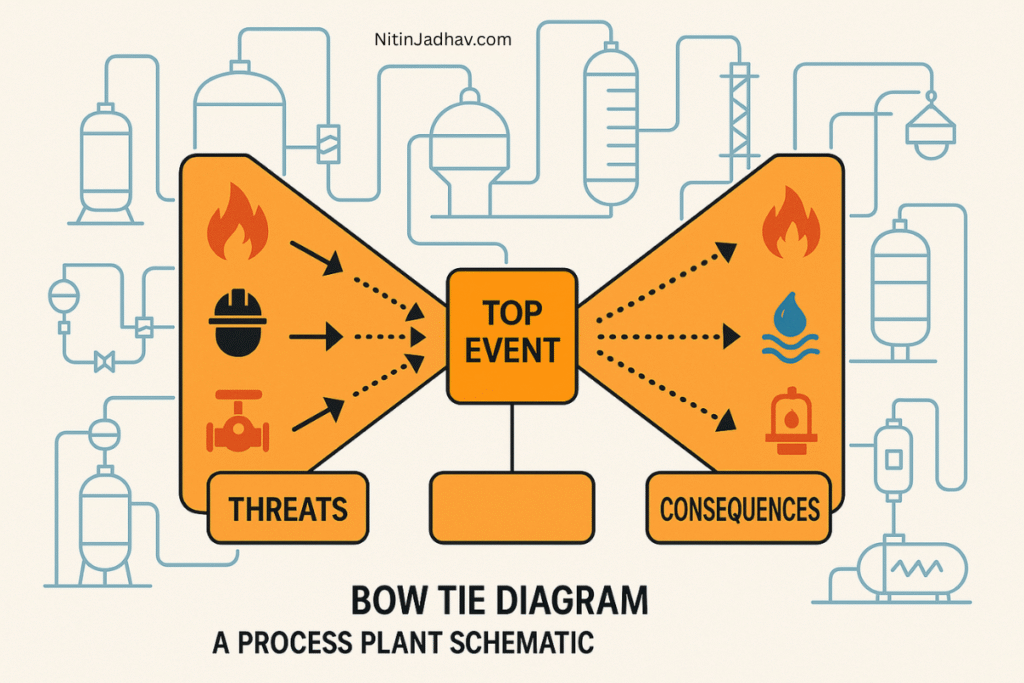
Bow Tie diagram showing threats, top event, prevention and mitigation barriers in a process facility

Bow Tie Method – A Comprehensive Guide to Barrier-Based Risk Management in High-Hazard Industries

Loss Prevention, Process Safety, Risk Management

This comprehensive guide explores the Bow Tie Method — a powerful visual tool in process safety for linking hazards, threats, top events, consequences, and barriers. Ideal for managing major accident hazards in oil & gas and other high-risk industries.
Bow Tie Method – A Comprehensive Guide to Barrier-Based Risk Management in High-Hazard Industries Read Post »

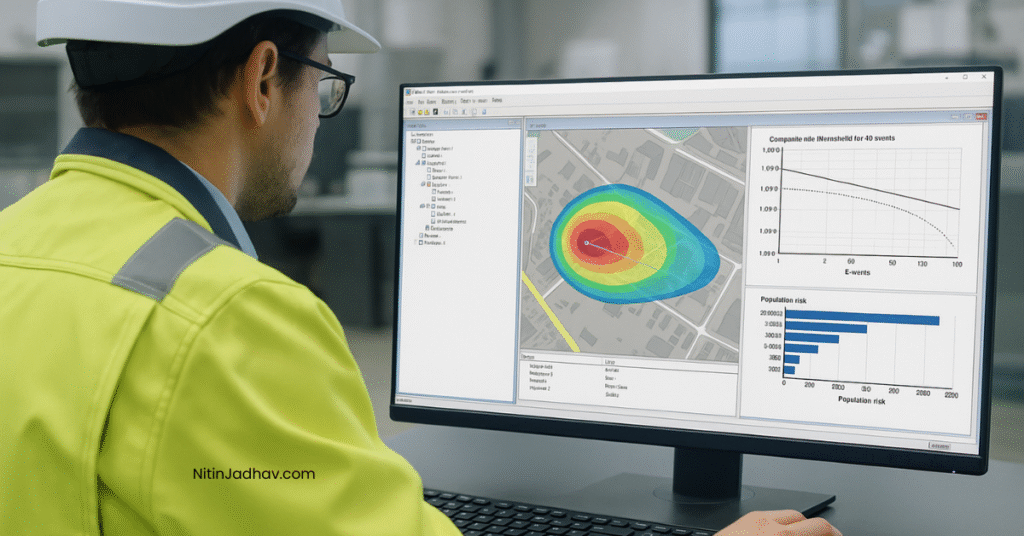
Risk contour diagram showing individual and societal risk zones in an oil and gas facility for QRA analysis

QRA (Quantitative Risk Assessment): Why It Matters in Oil & Gas Projects

EPC Engineering, Oil & Gas Projects, Process Safety, Risk Management, Safety Studies

In high-risk industries like oil & gas, safety isn’t optional—it’s critical. Quantitative Risk Assessment (QRA) helps identify, quantify, and control hazards before they become disasters. Learn how QRA adds value, improves design, reduces cost, and ensures regulatory compliance in oil & gas projects.

QRA (Quantitative Risk Assessment): Why It Matters in Oil & Gas Projects Read Post »

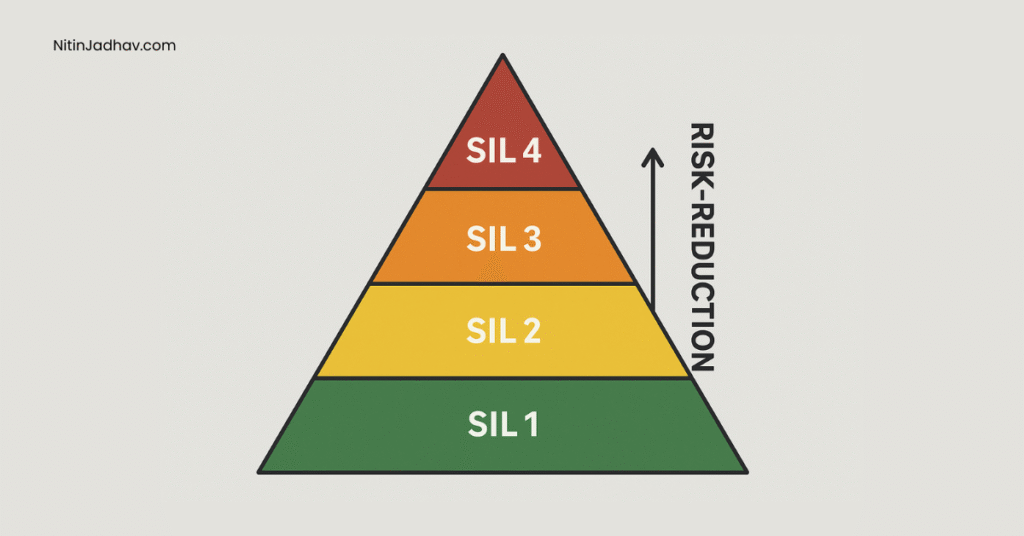
Illustration of Safety Integrity Levels and risk reduction in process industry safety systems

Safety Integrity Level (SIL) Study – A Comprehensive Guide

Engineering, Functional Safety, Process Safety, Risk Management

A comprehensive and practical guide for engineers and safety professionals to understand, implement, and verify Safety Integrity Level (SIL) studies as per IEC 61508/61511. Includes SIL determination methods (LOPA, Risk Graph), real-world case studies, tools, and step-by-step implementation checklist.

Safety Integrity Level (SIL) Study – A Comprehensive Guide Read Post »

Scroll to Top